
Seminar 3 (26/02/2026): Premodern Healing from Spas and Old English Leechbooks
For the third seminar of The Long Middle Ages, we welcome Dr Giacomo Savani and Louise Simongiovanni.
Paper 1: Dr Giacomo Savani, ‘Voiceless Spas: Non-Elite Sensory Interactions with Water and the Divine’
Abstract:
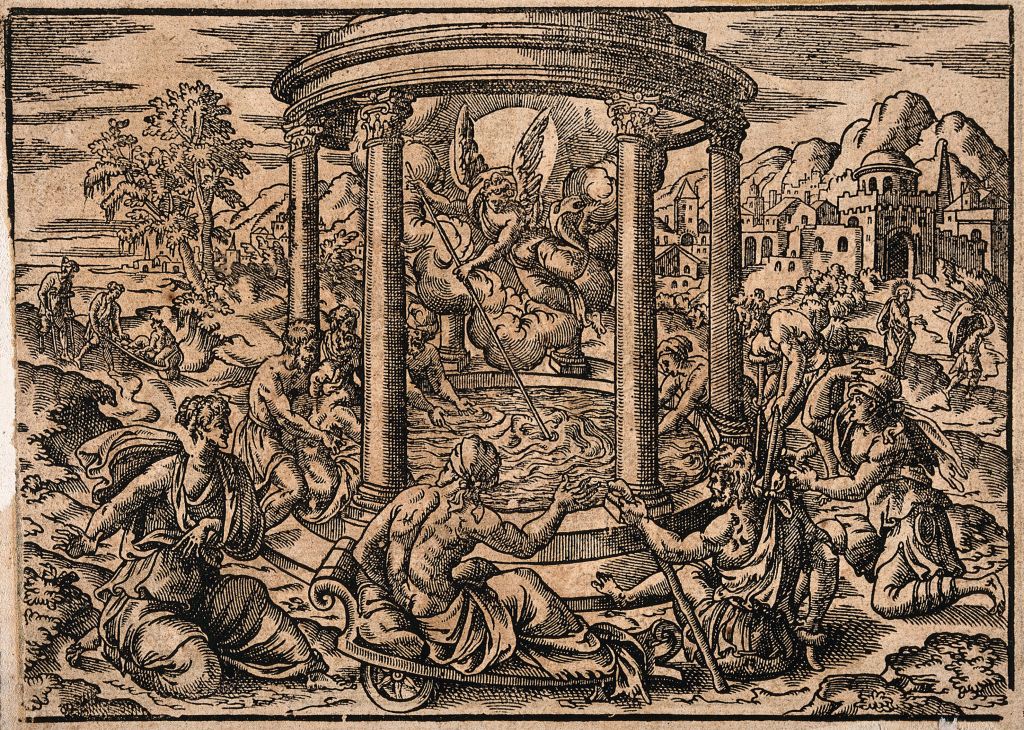
This paper explores the sensory and religious experiences of non-elite individuals engaging with thermal spaces in pre-modern Europe. My aim is to challenge the prevailing narrative that portrays spas mainly as elite venues for health and leisure. Instead, I foreground the voices and practices of subaltern groups, peasants, pilgrims, and the sick, who viewed sacred waters as sites of divine intervention and healing. Focusing on Bagni di Lucca in Tuscany and Monteortone in Veneto, the paper examines how folklore, religious belief, and embodied experience shaped interactions with thermo-mineral springs. Sources such as Matteo Bendinelli’s 1489 Tractatus reveal how rural communities connected the healing power of water to biblical miracles, while visions and rituals at Monteortone illustrate the merging of physical and spiritual healing.
The paper applies Yannis Hamilakis’ theory of sensorial assemblages to argue that sound, temperature, and smell produced site-specific religious knowledge, enabling worshippers to experience communion with the divine. It also addresses the methodological challenges of reconstructing non-elite experiences from elite sources and considers whether creative writing can ethically fill these gaps without imposing modern perspectives on the past.
About the speaker:
Dr Giacomo Savani is a Lecturer in Ancient History at the University of Leeds. His work spans multiple disciplines, examining topics such as Roman imperialism, the history of the senses, ancient medicine and its reception, and ancient environments. His recent project, ‘Women and the Baths: Ancient Medicine, Pleasure, and the Female Body in Renaissance Italy’ (funded by a Marie Skłodowska-Curie Individual Fellowship at the School of History, Ca’Foscari University of Venice), assessed the role of ancient hydrotherapy in shaping gender-specific medical knowledge during the Renaissance.
He also explored how unwell women experienced the material culture and architecture associated with healing baths in Antiquity and the Renaissance, addressing the ongoing lack of engagement with disability in sensory studies.
He published a book in 2025 with Routledge, titled Rural Baths in Roman Britain: A Colonisation of the Senses. Link:
Paper 2:Louise Simongiovanni, ‘Balms, Baths, and Beyond: Exploring the Therapeutic Relationship in the Old English Leechbooks’
Abstract:
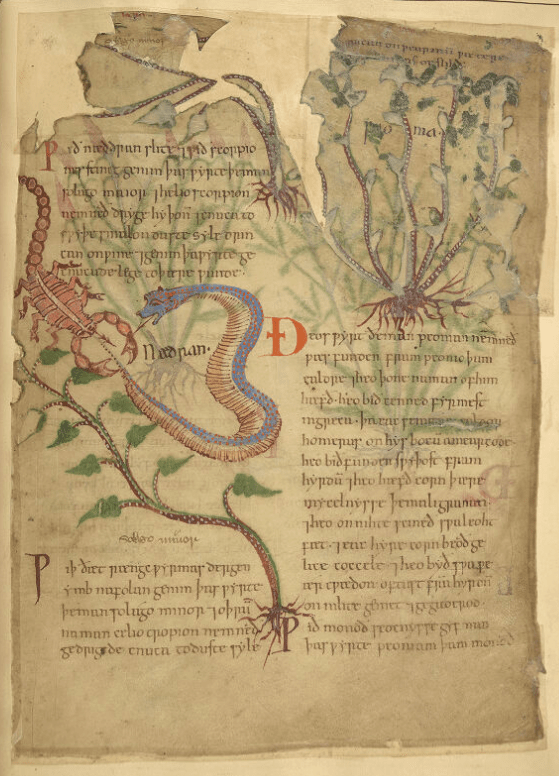
If medieval medicine is often dismissed as superstitious and backwards practices, there is still much to learn from it. The Old English medical collections, or leechbooks, have been thoroughly studied for their philological, magical, religious, and pharmacological contents but one thing has been less considered: the relationship between the læce or leech—the early medieval practician—and the people they endeavoured to heal.
The aim of this paper will thus be to try and understand, through the study of the leechbooks, the nature and extent of interactions between healer and healed. That is, to find traces of what we call today the ‘therapeutic relationship’, or the ‘doctor-patient relationship’. However, the læce was not exactly a doctor, and the patient was not exactly a patient—yet. To uncover the specifics of an early medieval therapeutic relationship, the presentation will focus first on the læce: his role, and the many hypotheses regarding his identity. Then, I will turn to the patients in both their generic and specific manifestations—men, women, children, animals—and how they transpire in the leechbooks through a medieval ‘medical’ gaze. Finally, once light is shed on both figures, the relationship between them will be analysed through examples of interactions found in the remedies. From this, a typology of interactions will be established to better apprehend the multifaceted nature of early medieval care.
About the speaker:
Louise Simongiovanni is a first-year D. Phil student at Sorbonne Université in Paris and member of the Centre for Medieval English Studies. Her project centres around care in early medieval England, looking particularly at the Old English medical collections or “leechbooks” with an approach that combines medieval and philological studies with digital and medical humanities. As her research is funded by the Global Health Institute of Sorbonne Université, her project aims not only to look back to the Middle Ages, but also to think far beyond it. The objective is to find resonances between medieval medical practice and the contemporary needs of a struggling healthcare system and ultimately to promote a practice of care both more empathetic and more sensible to the cultural diversity of patients.
Connect with Louise:
 The Long Middle Ages
Leave a comment