
Seminar 5 (26/03/2026): Book Donation and Book History Across the Medieval and Early Modern Periods
For the fifth seminar of The Long Middle Ages, we welcome Dr Emma Nelson and Amber Peut.
Paper 1: Dr Emma Nelson, ‘No Take-Backsies? Gerald of Wales and the Boundaries of Book Donation’
Abstract:
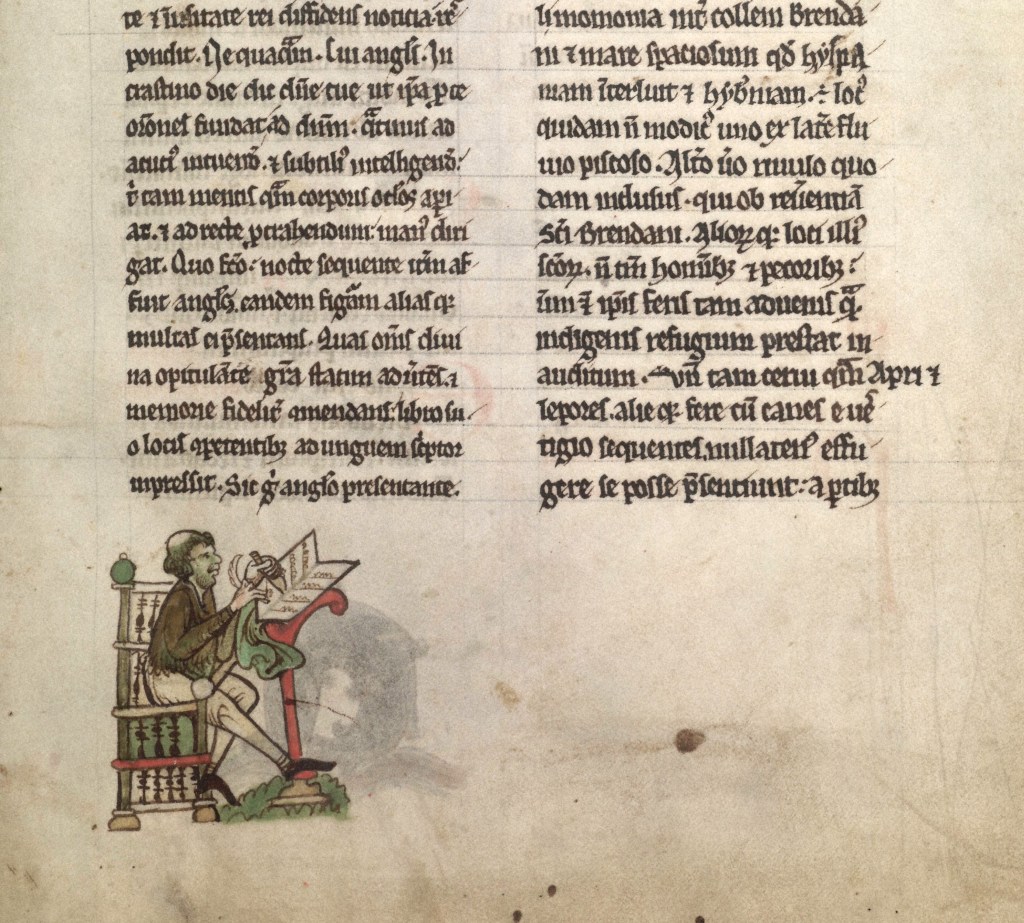
During the second half of the twelfth century, an important shift occurred in the history of medieval libraries, as individual donation replaced communal acquisition as the dominant mode of library growth. This development can be characterised as a shift from a monastic to a secular-clerical model of growth, and book donation represented just one aspect of a multi-faceted pattern of patronage by the twelfth-century secular clergy. Such donations reρected donors’ senses of clerical identity on the one hand, and their anxieties around the morality of clerical wealth and their hopes of salvation after death on the other hand. The theory behind such donations was underpinned by contemporary thought on gift-giving, which stressed that gifts ought to be given freely and open-handedly, but in practice, donation could be much more complicated.
This paper explores a number of donations made by the famous author Gerald of Wales to religious institutions and individuals with the aim of furthering his own goals. Gerald’s discussions of his donations variously conformed to, co-opted and transgressed twelfth-century models of donation, and provide a starting-point for an examination of these models’ boundaries. Such an examination connects textual reception, the suitability of certain genres as subjects of clerical writing and their appropriateness for inclusion in clerical libraries, and approaches to publication and patronage.
About the speaker:
Emma Nelson has recently completed a PhD in History at the University of Manchester, focusing on the twelfth-century library of Lincoln Cathedral. Through a comprehensive examination of the library’s catalogue and the extant manuscripts, she explored book production and the cathedral’s intellectual and literary culture, setting out the case for their signiϮcance to our understanding of the English secular cathedrals at this date.
Her research interests include the medieval and early-modern libraries of secular cathedrals and colleges, and the medieval secular clergy and monasticism more broadly. She currently works at Chetham’s Library in Manchester.
Connect with Emma:
Paper 2: Amber peut, ‘Selling love and lust to the early modern youth? Printed alba amicorum as pedagogical works’
Abstract:
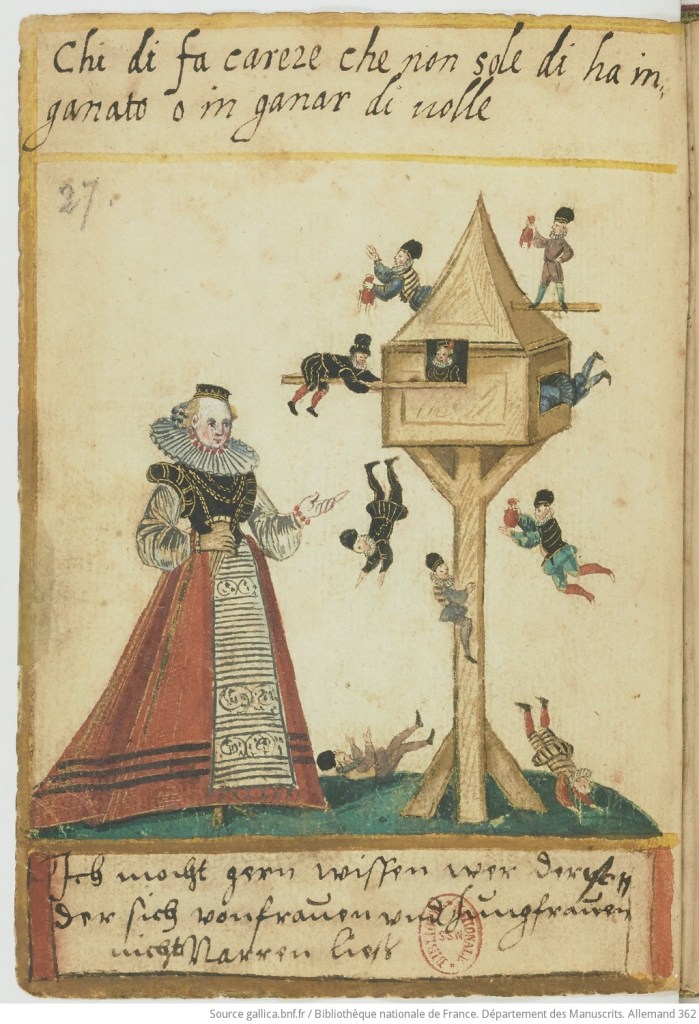
The practice of keeping an album amicorum or friendship album became popular amongst students in Western Europe during the course of the sixteenth century. Emblems formed an integral part of the practice of keeping an album amicorum. Not only were emblem books often used as alba amicorum, the interplay between word and image also made them an appealing form of contribution to blank alba amicorum. Starting around the 1570s publishers became interested in catering to the growing well-to-do audience of students by marketing books which could function simultaneously as printed alba amicorum and emblem books. These books were advertised as moral guidance for the youth through the medium of the emblem, particularly on matters related to love and lust.
While current scholarship has acknowledged the existence of these hybrid books, little research has been done on its visual contents. Nor has any attention been paid to the use and effectiveness of these works. This paper explores how students used, reused and/or modified these emblems in alba amicorum by examining a selection of surviving alba amicorum from the Low Countries and modern-day Germany. The wide variety of different ways in which students interacted with these emblems give scholars today a unique and as of yet unexplored look at the possible reception of pedagogical emblems. Rather than unanimously embracing or rejecting these emblems, each individual album showcases the owner’s and contributors’ ability to present themselves morally in whatever way they saw fit. This research ultimately contributes to bridge the gap between the printed book and manuscript present in the discipline of Book History.
About the speaker:
Amber Peut is a PhD candidate working at Leiden University. She is part of the NWO funded project Images on the Move. Friendship Albums as Pictorial Networks in Early Modern Europe (1550-1700) led by dr. Marika Keblusek. She completed her bachelor’s degree in History and her master’s degree in Colonial and Global History at Leiden University.
She is currently working on her dissertation with the provisional title Kids these days. Images embodying love and lust within the genre of the album amicorum (1550-1700). This dissertation will explore how images related to the concepts of love and lust were used, reused and/or modified in the alba amicorum of early modern young adults in order to build out the iconography of alba amicorum. Her research interests lay mainly within the fields of Book History and Cultural History with a special focus on the interaction between early modern print and manuscript images.
Connect with Amber:
Email Amber at: a.r.peut@hum.leidenuniv.nl
View Amber’s profile at: https://www.universiteitleiden.nl/en/staffmembers/amber-peut#tab-1
 The Long Middle Ages
Leave a comment