
Autumn Seminar 1 (01/10/2026): East Asian Spirit Pacification and the Severn Sea Zone
For the first seminar of the Autumn series of The Long Middle Ages, we welcomed Tham Chui Jun and Caroline Bourne.
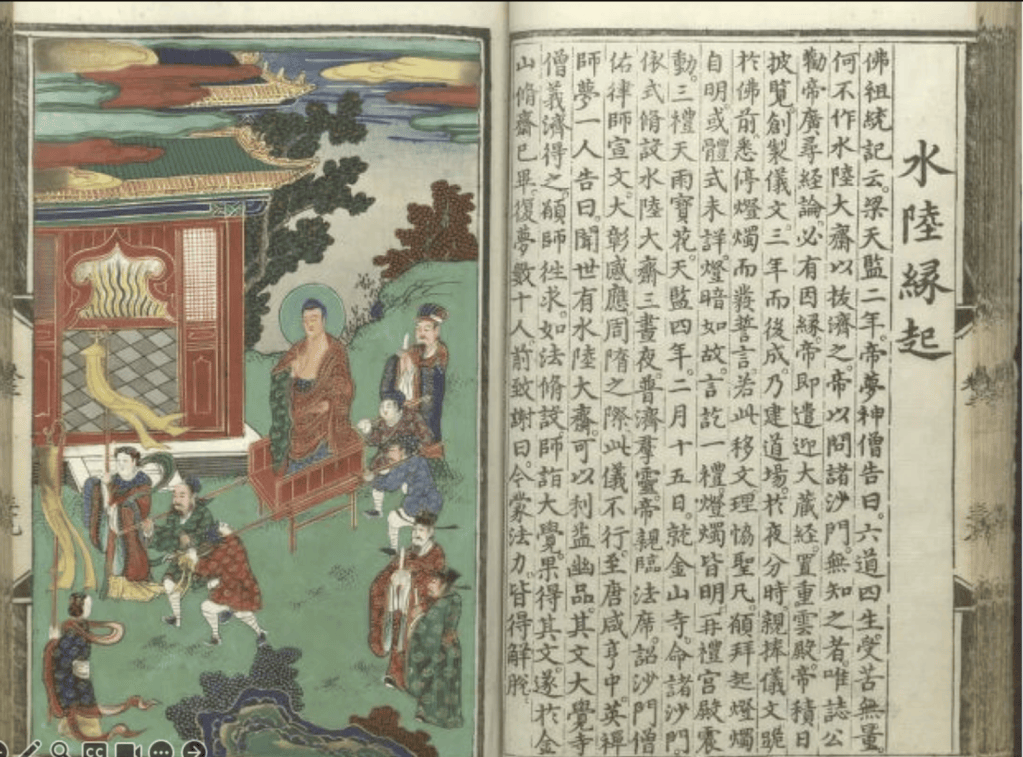
Paper 1: Tham Chui Jun, ‘Governing the Dead: Spirit Pacification, the Water-Land Retreat, and Rulership in Medieval East Asia’
Abstract:
In medieval East Asia, spirit pacification was the practice of neutralising the spirits of those who had died traumatic deaths and therefore posed a threat to the living. In circumstances where the danger was especially potent, due to either the sheer number of the dead, or the elevated socio-political status of certain dead individuals, the responsibility for performing spirit pacification fell to ruling figures.
When three new regimes were established in the fourteenth century in East Asia, the Ashikaga shogunate in 1336, the Ming dynasty in 1368, and the Joseon dynasty in 1392, the respective founders engaged in traditional measures of mass spirit pacification. They constructed temples, commissioned scripture-copying and scripture-recital, and sponsored rituals for the dead. Historically, these general patterns in practice had manifested in each polity in specific ways. At the same time, against the background of the decline and collapse of the Mongol Yuan dynasty (1271-1368), and the reverberations this had across East Asia, we see the rise of one ritual to regional significance: the Water-Land Retreat. Where previous research has centred on individual polities, this presentation takes a broader perspective, asking: why did all three of these fledgling regimes adopt this same rite, in the same half-century, for the same purpose; and what does this tell us about regional visions of rule?
About the speaker:
Tham Chui-Jun recently completed a PhD in East Asian history at Cambridge University, under the supervision of Professor Mikael Adolphson. Her research is driven by an interest in the theories and frameworks humans historically have used to understand the world around them, how universal they happen to be, and how the study of specific times and places can help challenge our perceptions. She explores this interest through the lens of East Asian ritual history.
Paper 2: Caroline Bourne, ‘Sailing the Severn Sea: The Establishment of a Maritime Cultural Zone‘
Abstract:
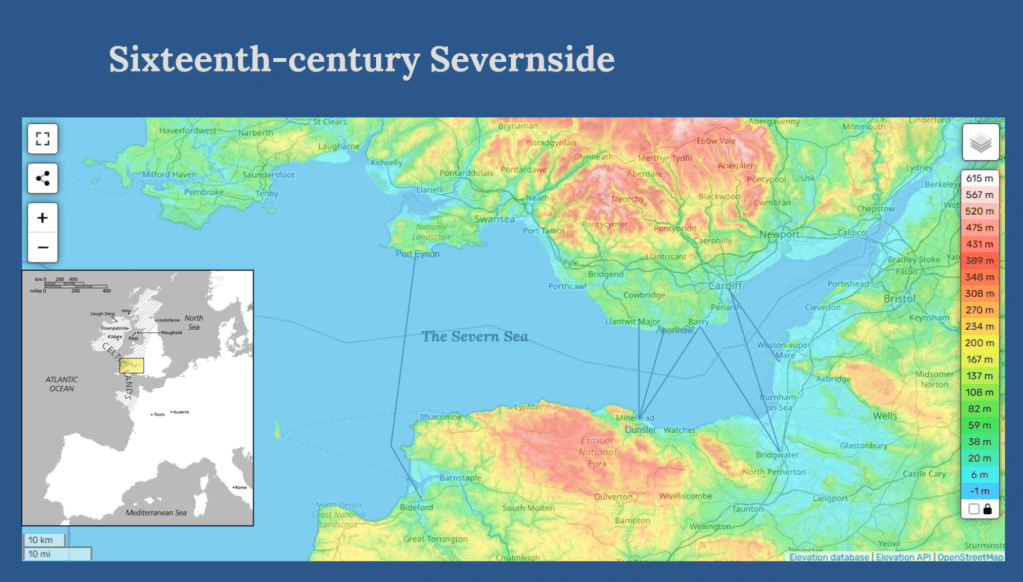
The Bristol Channel, known in the Long Middle Ages as the Severn Sea, has often been treated as a political and geographic boundary between Wales and England. This paper argues instead that it functioned as a dynamic maritime cultural zone, with the visibility of the two coastlines encouraging contact. Despite it being an extremely dangerous stretch of water, the Severn Sea enabled sustained interaction between the two shores, driven by a persistent desire for connection rather than mere proximity.
The seminar traces the establishment of nodal points from the post‑Roman period onward, beginning with early religious travel from the southern Welsh coast and later east–west traversing routes. It examines how these sites became way‑stations during the Viking Age, some developing into Scandinavian trading posts, and how Norman lords in the late eleventh century used the sea to consolidate holdings across south Wales and the West Country. Their movements facilitated northward colonisation and the emergence of a culturally Anglicised region in south Wales. The paper concludes by analysing early modern commercial networks linking major ports around the Severn Sea, demonstrating the long-term continuity of this maritime cultural landscape.
About the speaker:
Caroline Bourne completed her PhD at the University of Reading in 2024, where she challenged long-held beliefs about the Anglo-Norman conquest of Gower in south Wales. Her research uncovered the complex and often subtle interactions between the newcomers and the Welsh, offering a richer understanding of the region’s history.
Caroline’s expertise on Gower has been featured in Alex Harvey’s book, Little Kingdoms: An A-Z of Early Medieval Britain, and she received a commendation for her entry in the Mortimer History Society Essay Prize, which was recently published in their journal. She was a contributor to Medieval Perceptions of Magic, Science, and the Natural World, which was published in 2024 by Arc Humanities Press, with her chapter focusing on religious travel in the Severn region. She is currently a Visiting Research Fellow at the University of Reading researching the early development of regional identities.


Leave a comment