

Autumn Seminar 2 (15/10/2026): Lombard Onomastics and Paul the Persian
For the second seminar of the Autumn series of The Long Middle Ages, we welcome Samuel Rowe and Riccardo Brighenti.
Paper 1: Samuel Rowe, ‘Lombard Onomastics and Rulership Discourse’
Abstract:
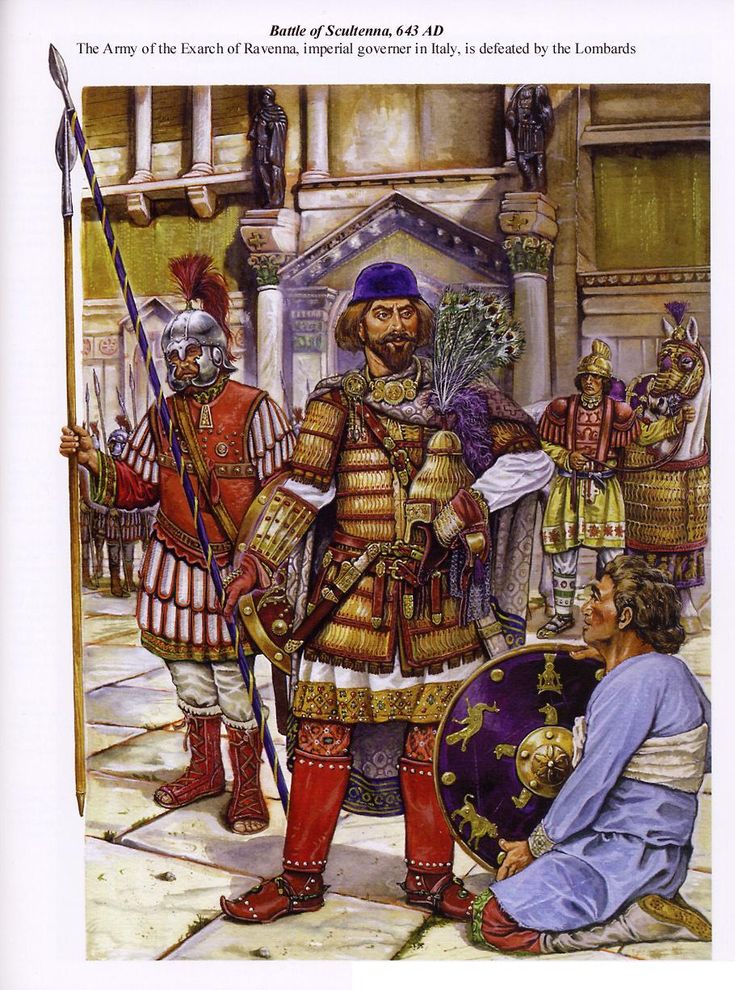
Onomastics are a unique type of strategy of identification: by nature, they involve a conscious choice to name someone and thus bestow them a layer of identity in the onomastic mode. Onomastics were a particularly fruitful avenue for strategies of identification for those using Germanic-language names in early medieval Italy: shared roots provided an “onomastic architecture” denoting kinship and dynastic legitimacy (e.g. the blood-related kings Ansprand, Liutprand and Hildeprand); certain roots carried prestigious implications (e.g. *hrōmi “fame”, which fused with *Rōmu “Rome”); some rulers extended their names to make an associative, legitimising pun (Prunknamen, e.g. Cunipert “kin-bright” → Cunincpert “king-bright”); Latin-language roots illustrated acculturation and osmosis (e.g. Lupichis, Flavipert); and finally, names could be bestowed to facilitate a specific career, in milieus where often one onomasticon dominated (e.g. a Lombardic name to succeed in a political world where magnates promoted elite Lombard identity).
In this paper, I would like to track the trajectory of these different phenomena and explore the complex picture early medieval onomastic evidence can present us over time in a restricted area for a specific group (rulers), and how it connects to the wider picture of identificatory discourse; it is a particularly rich typology, but often neglected by historians, perceived as the separate domain of linguists and philologists. This can sometimes lead to its improper use in historiography, with superseded explanations for names and titles and a lack of awareness of new concepts such as semantic drainage.
About the speaker:
Samuel Rowe is a PhD student at the Universities of Padua, Ca’ Foscari Venice and Salamanca. His research concerns rulership discourse and the strategies of identification and representation of rulers in early medieval Lombard Italy. He is interested in this same subject across all contemporary polities and has previously worked on Merovingian Gaul during an MPhil at Cambridge. More widely, his interests are on all types of identity across the Middle Ages in and beyond Europe.
Connect with Samuel:
Link to read Samuel’s blog: mundusbarbarorum.wordpress.com.
Paper 2: Riccardo Brighenti, ‘Aristotelianism by the Tigris. Paul the Persian and the Reception of Aristotle’sDe interpretatione‘
Abstract:
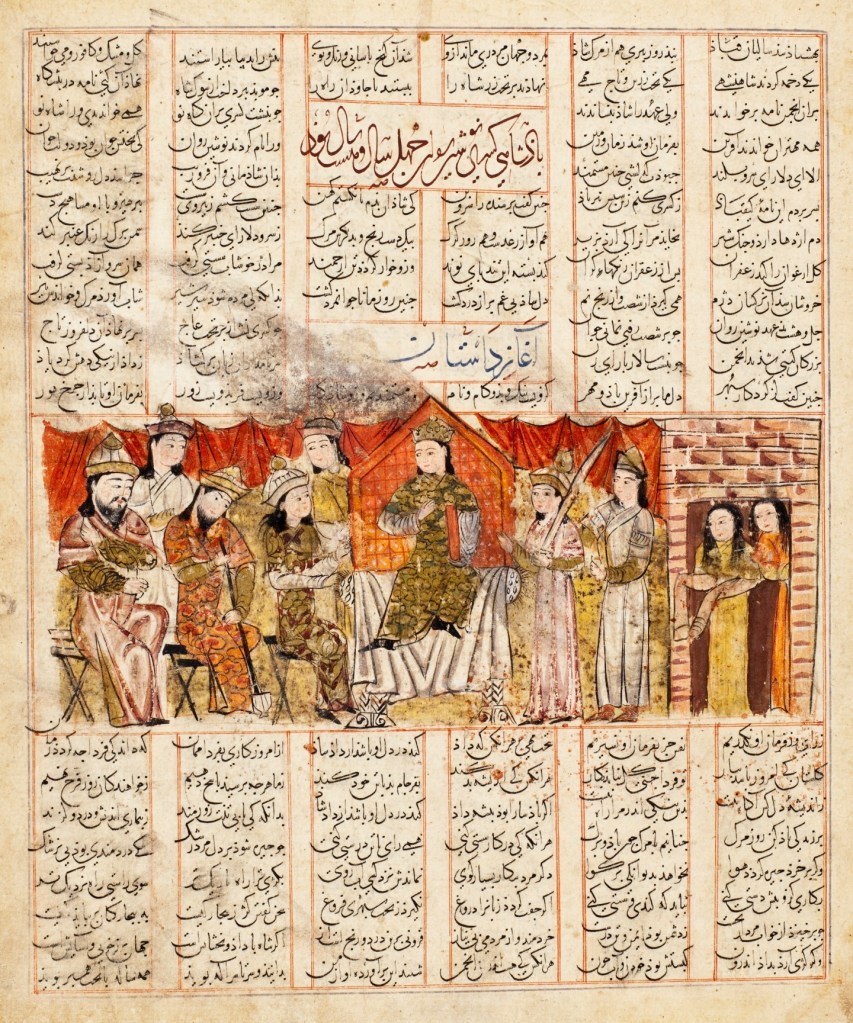
My talk presents new findings on one of the most elusive strands in medieval intellectual history: the transmission and transformation of Greek philosophy in the sixth-century Sasanian world. The surviving evidence, attributed to a certain Paul the Persian, is exceptionally sparse. Paul’s corpus, originally written in Middle Persian, reveals a primary interest in Aristotle, especially in his logic. Paul authored a general treatise on logic addressed to king Khusraw I (r. 531-579 CE), a thematic handbook on Aristotle’s De interpretatione, and a discussion of the parts of philosophy and the subject-matters of Aristotle’s writings. We are left with Syriac translations of the first two treatises, while fragments of the third are quoted by Miskawayh in Arabic.
Paul’s writings belong to a quintessentially medieval framework, whereby Aristotelian logic functioned as the gateway not necessarily to the rest philosophy, but also to medicine and theology—increasingly drifting away from the Neoplatonic curriculum, whereby the study of Aristotle’s writings introduced to Plato’s. By focussing on two significant instances, I shall sketch Paul’s engagement with Aristotle’s De interpretatione 16a3-8. I shall conclude by considering also Paul’s distinctive reworking of the Alexandrian definition of philosophy as “assimilation to God”. A comparison with roughly contemporary Greek, Greco-Latin, and Greco-Syriac Aristotelians reveals both a close continuity with the earlier exegetical tradition and striking elements of originality. While the fundamental question of Paul’s direct access to Greek texts remains open, my finding confirms that Paul’s works represent a paradigmatic node in the medieval transmission of Aristotelianism.
About the speaker:
Riccardo Brighenti is a doctoral student at the Department of Philosophy “P. Martinetti”, University of Milan (Italy) and a member of CeSIM (Centre for the Intellectual History of the Middle Ages). Following research stays in New York City and Cambridge, UK, Riccardo has been a Visiting Student Research Collaborator and a non-degree graduate student at Princeton University. Riccardo’s doctoral research explores Aristotelian philosophy of language in the early Middle Ages, focusing on selected sixth-century works on Aristotle (including Paul the Persian’s) their earlier sources (first century BCE–third century CE), and aspects of their later reception.
Riccardo has also published on the vernacular reception of ancient and medieval thought in sixteenth-century Italy:Plato’s Magnet and Gikatilla’s Stream: Alessandro Farra on Furore Poetico;Ancient Wisdom and Sacred History Emblematised: A Study of Alessandro Farra’sFilosofia Simbolica. Riccardo has presented his research on Syriac (and Perso-Syriac) Aristotelianism at conferences and seminars in Europe and North America.
Connect with Riccardo:
View Riccardo’s publications:
“Plato’s Magnet and Gikatilla’s Stream: Alessandro Farra on Furore Poetico” https://link.springer.com/chapter/10.1007/978-3-032-21020-3_2
“Ancient Wisdom and Sacred History Emblematised: A Study of Alessandro Farra’s Filosofia Simbolica”https://www.brepolsonline.net/content/journals/10.1484/J.QUAESTIO.5.155557


Leave a Reply